

Reliable energy for homes, businesses and industries across the nation
Australia’s natural gas industry is the steady flame that keeps our economy strong — providing reliable energy for homes, businesses, and communities across the country every single day. It is one of Australia’s largest corporate taxpayers, supports around 215,000 jobs nationwide and contributes around $105 billion a year to the national economy.

Supporting 215,000 jobs across the nation1

Contributing $105 billion each year to our economy1

More than 5 million homes rely on natural gas for cooking, heating and hot water2
Western Australia
Direct and Indirect Jobs
73,000
Contribution to economy per year
$35 BILLION
Facts
Gas helps to generate around 58 percent of the electricity across the state.
3 KPMG, Economic contribution of the gas industry, February 2025.
4 Economic Impact of Queensland Natural Gas and LNG 2014–24, Lawrence Consulting, 2025.
5 Business NSW, Running on Empty 2.0 - The evolving role of gas in NSW, 2025.
6 Victorian Government, 2023 residential gas connection data.
7 Department of Climate Change, Energy, the Environment and Water, 2026.


Natural gas supports 215,000 Australian jobs

From regional towns to major industries, natural gas helps sustain careers in manufacturing, power, transport, and Australian small businesses.
Australia’s gas industry supports around 215,000 jobs nationwide, many of them in rural and regional communities.1
These jobs provide a range of flow-on benefits including upskilling and educational opportunities, spending with local businesses, employment opportunities for First Nations people, and supporting local community groups.
1 KPMG, Economic contribution of the gas industry, February 2025

Natural gas contributes $105 billion to the national economy each year
Australia’s natural gas industry is a key driver of our nation’s prosperity and growth, contributing around $105 billion a year to the national economy. Its direct contribution represents around 3.7% of Australia’s GDP.1
The industry’s significant investments generate flow-on benefits across the country, supporting Australian businesses while strengthening regional economies, government revenues and energy security.
KPMG analysis found the Australian gas industry is the nation’s most productive, with the average full-time-equivalent worker generating $2.8 million in gross value added, around 16 times the Australian average.
1 KPMG, Economic contribution of the gas industry, February 2025
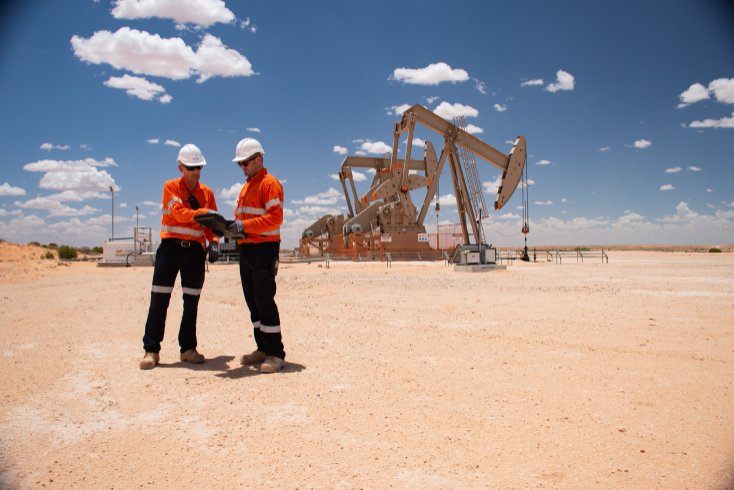
One of the highest taxpaying sectors in Australia
The oil and natural gas industry is one of Australia’s largest corporate taxpayers, contributing an estimated $21.9 billion in taxes and royalties to state and federal governments in 2024-25. 13
This contribution helps fund schools, hospitals, roads and essential services that Australians rely on every day.
The industry has paid almost $60 billion in taxes and royalties since 2022, demonstrating its substantial and ongoing contribution to Australia. 14
13 Australian Energy Producers Financial Survey, July 2025
14 Australian Energy Producers Financial Surveys 2022-23, 2023-24, 2024-25
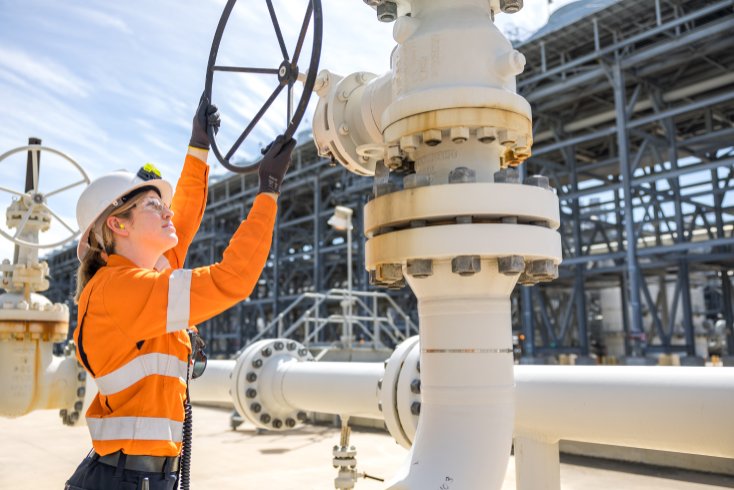
Natural gas for everyday living
More than five million Australian homes use natural gas for cooking, heating and hot water.8
From preparing meals to keeping homes warm and providing hot water, natural gas supports the everyday needs of millions of Australians.
8 Australian Government, Future Gas Strategy, May 2024

Natural gas for reliable electricity
Natural gas plays an important role in Australia’s electricity mix, providing reliable and flexible power generation for homes, businesses and essential services.
Gas-fired power stations can be switched on quickly when demand is high or when wind and solar generation are not producing enough electricity. As renewable generation grows, natural gas helps to provide the backup needed to maintain secure and reliable electricity supply.9
Natural gas provides 17% of Australia’s electricity, and plays an even greater role in the Northern Territory and Western Australia, accounting for 81% and 58% of electricity generation respectively.10
9 Australian Energy Market Operator, Integrated System Plan 2026, June 2026
10 Department of Climate Change, Energy, the Environment and Water, Australian Energy Statistics, 2026.
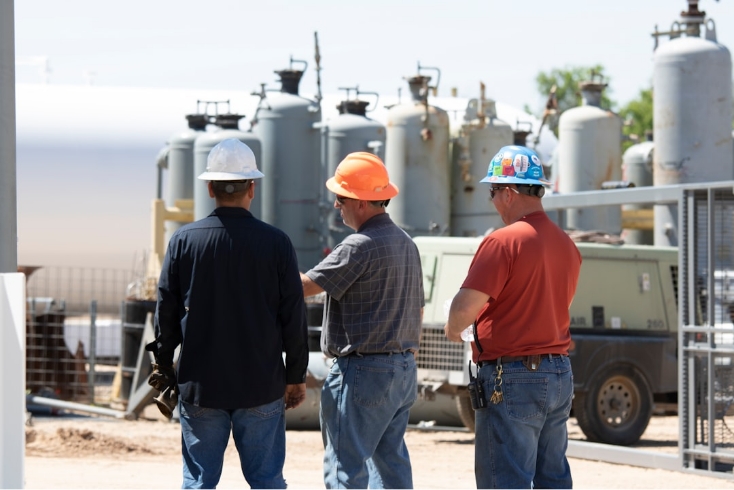
Natural gas for Australian manufacturing
Natural gas is the main source of energy used in Australian manufacturing, providing around 37% of the sector’s energy needs.17
It is used in manufacturing and industrial processes to generate the extreme heat needed to transform raw materials into new materials and products. From food and pharmaceuticals to bricks and glass, natural gas enables the production of everyday goods Australians rely on.
17 Department of Climate Change, Energy, the Environment and Water, Australian Energy Statistics, 2026.

Natural gas strengthens Australia’s energy security
Australia’s liquefied natural gas (LNG) exports are a key driver of the industry’s economic output and tax contribution.
LNG is Australia’s third-largest export, worth $65 billion in 2024-2511 and accounting for 10% of all Australian exports by value.12
Australia’s LNG sector has also invested more than $400 billion in Australia since 2010, supporting new gas supply for domestic use and strengthening Australia’s position as a global energy leader.15
Australia’s LNG exports support the energy security of regional partners including Japan and South Korea. In return, these longstanding trade relationships help Australia secure essential fuel imports such as petrol, diesel and fertiliser.
Prime Minister Anthony Albanese has recognised, “our gas exports are directly linked to our national fuel security.”16
11 Australian Bureau of Statistics, International Trade in Goods, February 2026
12 Australian Energy Producers, 2026–27 Pre-Budget Submission, 2026.
15 Wood Mackenzie, LNG Taxation Estimates and Review, April 2023.
16 Prime Minister Anthony Albanese speech on 29 April 2026
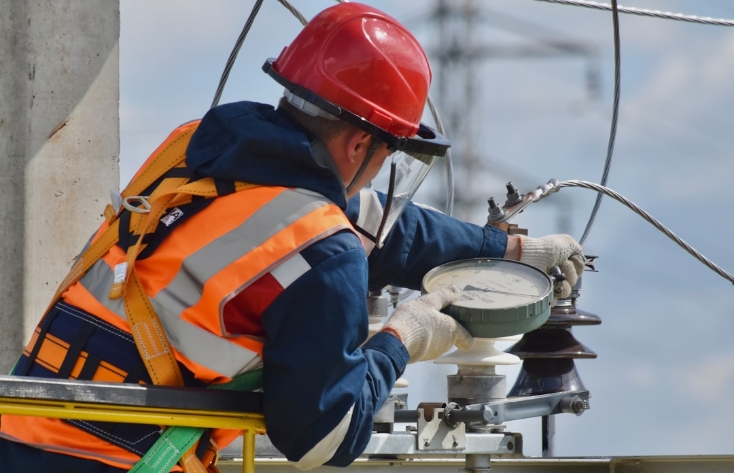
Click each card to reveal the truth about Australia's natural gas industry
Natural gas is the largest source of energy used in Australian manufacturing.
Natural gas provides 37% of the energy used by Australian manufacturers, supporting the production of food, fertiliser, glass, bricks and other essential products.
Ref: DCCEEW, Australian Energy Statistics 2026Australia doesn’t need natural gas. We could switch to renewables right now.
It’s a MYTH that Australia doesn’t need natural gas and that we could switch to renewables right now.
The FACT is, natural gas will be needed for many decades to provide reliable electricity and energy for manufacturing and minerals processing.
Ref: Australian Government, Future Gas Strategy, 2024Australia’s natural gas industry supports more than 200,000 jobs.
Australia’s natural gas industry supports around 215,000 jobs across the country.
Ref: KPMG, Economic Contribution of the Gas Industry, February 2025.We collect more tax from beer excise than gas.
It’s a MYTH that beer companies pay more in excise than gas companies pay in tax
The FACT is that Australian gas companies paid $21.9 billion in taxes and royalties in 2024-25 – that’s more than eight times what the Commonwealth raised in beer excise.
Ref: Australian Energy Producers Financial Survey 2024-25; Department of Treasury, Budget 2025-26, Budget Paper No. 1, March 2025Australia has plenty of gas, so no new supply is needed.
It’s a MYTH that Australia doesn’t need new gas supply
The FACT is Australia has abundant undeveloped gas resources, but continued investment in new gas exploration and production is needed to secure our long-term gas needs.
Ref: Australian Government, Future Gas Strategy, 2024Australia’s gas industry doesn’t pay much tax
It’s a MYTH that Australia’s oil and gas industry doesn’t pay much tax
The FACT is, the Australian oil and gas industry is one of the largest taxpaying sectors in the country, contributing $21.9 billion in taxes and royalties in 2024–25. These payments help fund government essential services and infrastructure across Australia.
Ref: Australian Energy Producers Financial Survey 2024-25; Australian Taxation Office, Corporate Tax Transparency Report, Oct 2025Yes. Australia has abundant undeveloped gas resources 1 – enough to meet our long-term domestic gas needs and remain a reliable energy partner in our region.
However, Australia’s long-term energy security requires continued investment in new gas exploration and development to meet our future gas needs.
The Australian Government’s Future Gas Strategy recognised the need for continued investment in gas exploration and development to avert near-term supply shortfalls and meet Australia’s energy needs to 2050 and beyond. 2
1 Geoscience Australia, Australia’s Energy Commodity Resources 2024, Aug 2026
2 Australian Government, Future Gas Strategy, May 2024
Not in the foreseeable future. While renewables and battery capacity is increasing, natural gas will still be needed for decades to come to provide reliable electricity during periods of high electricity demand and extended ‘renewables droughts’ when weather conditions don’t suit renewables.
On the east coast, the Australian Energy Market Operator (AEMO) has confirmed natural gas will play an essential role in ensuring reliability of the electricity grid to at least 2050 as coal power retires and the share of intermittent (solar and wind) renewables grows. 3
Meanwhile, in Western Australia and the Northern Territory, natural gas remains the main source of electricity, accounting for 58% and 81% of electricity generation respectively.4
3 Australian Energy Market Operator, Integrated System Plan 2026, June 2026
4 Department of Climate Change, Energy, the Environment and Water, Australian Energy Statistics, 2026
For many industries that use gas to generate extreme temperatures or that use gas as an ingredient to make chemicals and products, there is no readily available alternative to using natural gas.
Electricity cannot achieve the extreme temperatures needed for many industrial processes. As the Australian Government’s Future Gas Strategy confirmed:
“Manufacturing cement, bricks, glass products, nitrogen-based fertiliser and electric vehicle batteries all depend on a reliable and affordable supply of gas.”
For some industries, converting from coal to natural gas is the most viable way to significantly reduce emissions.
The Australian Government’s Net Zero Plan found natural gas use in some industries such as steel and alumina manufacturing could increase over the next decade, as they switch from coal to gas to reduce their emissions-intensity. 6
5 Australian Government, Future Gas Strategy, May 2024
6 Australian Government, Australia’s Net Zero Plan, Nov 2025
Yes. In fact, natural gas is essential for Australia to reduce emissions towards net zero emissions by 2050.
The Australian Government’s Future Gas Strategy confirmed: “Under all credible net zero scenarios, natural gas is needed through to 2050 and beyond”. 7
Natural gas provides reliable back-up electricity for renewables as coal is phased out, and will continue to be needed to 2050 and beyond for manufacturing and minerals processing.
7 Australian Government, Future Gas Strategy, May 2024
Yes. The Australian Taxation Office has confirmed the Australian oil and gas industry is one of the largest corporate taxpaying sectors in the country. 8
In 2024-25 the gas industry paid $21.9 billion in taxes and royalties – equivalent to the annual cost of the Pharmaceutical Benefits Scheme (PBS). 9 10
The industry pays a range of state and Commonwealth government taxes, royalties and levies, which helps governments pay for schools, hospitals, roads and essential services.
8 Australian Taxation Office, Corporate Tax Transparency Report, Oct 2025
9 Australian Energy Producers, Financial Survey, July 2025
10 Department of Health, Disability and Ageing, PBS Expenditure and Prescriptions Report 1 July 2024 to 30 June 2025, Dec 2025
The location of a petroleum (oil and gas) project determines whether it is required to pay royalties to a state or territory government, or a production-based tax to the Australian Government.
For projects located in Commonwealth waters, the Australian Government’s Petroleum Resource Rent Tax (PRRT) applies, whereas onshore projects are subject to the royalty regime of the state or territory government where they are located. 11
11 Australian Taxation Office website, PRRT entities, accessed July 2025
The Petroleum Resource Rent Tax (PRRT) is just one of several taxes and levies the oil and gas industry pays. It operates in place of a state royalty scheme and only applies to projects in Commonwealth waters.
PRRT applies once a project has recouped development and eligible costs — which takes many years for capital-intensive projects like LNG facilities.
Treasury forecasts gas companies will pay $7.9 billion in PRRT over the next five years from 2025-26 to 2029–30. 13
12 Wood Mackenzie, LNG Taxation Estimates and Review, April 2023
13 Department of Treasury, Budget 2026–27, Budget Paper No. 1, May 2026
Comparisons with other countries ignore fundamental differences between their tax and resources operations.
Countries like Norway and Qatar have significant direct government ownership and/or investment in their oil and gas sectors, which means the government takes on more of the risks and shares more in the returns.
These countries also provide their oil and gas sector with generous support and tax breaks. For example, Norway provides an annual cash refund up to the value of 71.8% for exploration costs in order to reduce investor risk and encourage more oil and gas exploration and development. 14
In contrast, countries like Australia and the United States require private companies to assume the considerable financial risk of oil and gas development.
14 The Petroleum Tax System, Norwegian Petroleum, October 2024
No. Australian gas companies are already among the largest taxpayers in the country. 15
An additional 25% tax on Australian gas exports would result in an effective tax rate as high as 83% for some projects, and make investment in new gas projects commercially unviable. 16
The UK’s experience should serve as a warning for Australia of how higher taxes can undermine investment and energy security.
The UK introduced the Energy Profits Levy in 2022 at a rate of 25%. It was subsequently increased to 38%, taking the headline tax rate on upstream oil and gas activities to 78%. 17
Analysis by Wood Mackenzie found that the UK levy and subsequent policy changes were followed by a measurable contraction in UK oil and gas investment activity. As domestic production declines, the UK faces increased dependence on imported energy and increased exposure to international supply disruptions and price volatility. 18
15 Australian Taxation Office, Corporate Tax Transparency Report, Oct 2025
16 Wood Mackenzie, Analysis of proposed LNG export windfall levy: potential impact on energy project economics and fiscal competitiveness, April 2026.
17 HM Treasury, Changes to the Energy (Oil and Gas) Profits Levy, July 2024.
18 Wood Mackenzie, Analysis of proposed LNG export windfall levy: potential impact on energy project economics and fiscal competitiveness, April 2026.
